21 noiembrie 2008

Young Lust

Bounding behind "Goodbye Blue Sky" on the album and "What Shall We Do Now?" in the movie, "Young Lust" bursts into life as "a pastiche of any young rock and roll band out on the road" (Waters, 1979 interview). The music is so vibrantly cliché and the vocals so infectious that the song, while lampooning the sexually driven, big-guitar-rock songs and bands of the time, transcends its mold and becomes a lively entity unto itself. Although Waters' original song recounted the singer's cautious sexual exploits after school, "hanging around outside porno movies and dirty bookshops," the collaboration of Waters, Gilmour, and Ezrin quickly turned the song into a rollicking melody recounting Pink's entrance into rock and roll super stardom. And what better way to show celebrity excesses than through the eyes of yet another sex-driven star. Yet there's little wonder as to why Pink explodes into his new personage: in terms of album chronology, he has just left his overprotective mother, his school, and the life he knew, all of which oppressed the development of Pink's individuality. In the total absence of any boundaries whatsoever and with his newfound power as a celebrity (we never really do find out HOW Pink became a star…but that might be besides the point), Pink bursts through the rules placed on him throughout his life and recklessly embraces all that he was never allowed to experience. As the cliché says (which is appropriate for this purposefully stereotypical song), he simply immerses himself with sex, drugs, and rock and roll.

Though the song is relatively simple in terms of narrative (it's mainly used to detail the sexual exploits of rock star Pink whose every sexual fantasy is explored in every town that his tour stops in), the very style that Floyd uses to convey the message contributes to the deeper undertones of the album. It's interesting that Waters described the song as a pastiche, a literary imitation usually for the sake of satire. In one way, the pastiche technique is used to criticize a certain type of music or lifestyle without blatantly attacking it. To use a literary example, many of the chapters of James Joyce's masterpiece Ulysses parody other writers, books, and cultural trends of the time in an attack on what Joyce arguably saw as the degeneration of intellectual thought and literature. Although Joyce never mentions a specific writer or book in these parodic sections, his views are loudly proclaimed and his aim is nearly unmistakable. So too is the aim of Pink Floyd's "Young Lust," a parody of every rocker whose used his celebrity for sex and drugs, whose ego is as large as his image, and whose only care is the pursuit of carnal pleasure.

Going beyond sheer parody, Floyd interestingly uses this technique to further define Pink's character. The very fact that the song is an imitation of popular rock music of the 70's reinforces Pink's lack of individuality at this time in his life. Up until now, he has been molded by his mother, his school, and life itself into a model civilian void of nearly all traces of distinctiveness. In the movie Pink is punished by his teacher for writing poetry, restrained sexually by his ever-watchful mother, alienated from much of society because he has no father; all of the above have only contributed to the flimsy mask of personality, each incident painting a feature onto the mask rather than adding depth to his character. Fittingly, the first song of his new independence is one that is so full of rock clichés (the gruff, sexual voice; the catchy, melodic hook; the polished guitar solo) that it's hard to grant just one person credit for writing the song. It not only recalls popular musical trends at the time but the vocals are also reminiscent of an earlier Floyd tune called "the Nile Song", according to a Waters interview. Pink is not just a mere shadow of 70's rock and roll but he's also a shadow of his creators' earlier music. But it's only after he fully erupts that Pink finally comprehends the hollow shell that he is and the void of individual nothingness underneath, a realization that further contributes to the completion of the wall and the destruction of whatever self there once was.

While the song's position on the album denotes a more natural sense of newfound sexual freedom, one might argue that its position in the movie is much more dubious, casting the song in a retaliatory light. By this argument, Pink turns to the sexually willing groupies in order to get even with his unfaithful wife whose infidelity he has just discovered in "What Shall We Do Now?" Pink stays in his trailer for most of the song, only emerging momentarily when he sees a pretty female fan that catches his eye. Although he is obviously annoyed with her when she tries to get his autograph, he nevertheless takes her back to his hotel room, insinuating that he originally intended to do something with her, that is until he has another one of his "turns" in the next song.

One might also argue that the movie sequence is little more than an extension of the album version, "serious[ly] romanticizing" the life of a rock star (Waters, DVD). The majority of the song's scenes do little to advance the plot, mostly showing the excesses of celebrity life in the numerous women, abundant food, and flowing champagne before concluding the song with the groupie following Pink back into his trailer. Despite the scenes' apparent frivolity, there are a few subtleties that rescue the video from being nothing more than justification for sex jokes and female nudity. It's interesting to note that despite this being Pink's sexual anthem (at least on the album), he is probably the character with the least amount of screen time during the song. His absence from the majority of the footage creates a physical separation between the viewer and the character, one that quite possibly parallels Pink's feelings of abandonment and detachment after having discovered his wife's unfaithfulness. This sense of disconnection is further emphasized by the few times Pink is on screen. When the viewer is offered a glimpse of Pink, it is usually through the window of Pink's trailer, producing yet another wall of separation between the viewer and Pink as well as Pink and the rest of the world. Rather than joining his own backstage party, he sits by the window and indifferently watches the festivities outside of this trailer through a dark pair of sunglasses, yet another wall of separation between the external world and himself. Even when he does emerge from his trailer at the end of the song, he quickly retreats back into it when he finds that the female groupie is just another faceless fan in search of an autograph and a wild story. Interestingly, the fan is more persistent than one might expect, trying to take off his glasses to "find out what's behind [his] cold eyes" and following him into his trailer and eventually back to his hotel room, even after Pink has blatantly expressed his exasperation with her. Coupled with the groupie's resemblance to his wife (at least in my opinion…which is perhaps why Pink was drawn to her in the first place), the fan acts as yet another extension of the wife's insistent attempts to try to break through Pink's wall and truly connect with him. But just as Pink eventually drove his wife to having an affair, he will also drive the female fan away from him before she even glimpses what's behind his disguise in "One of My Turns."

Jane at Home Live

Jane at their apogee brings into focus all their subtle qualities that had by this time made them the most groovin' German band which didn't really fit into the Krautrock category with their rather simple but effective brand of heavy blues/rock on this spaced out August 1976 live performance at the Niedersachsenhalle in their hometown of Hanover, Germany. Loathe it or love it it's all here , stoned out vocals, lofty guitar freakouts, pulsating Hammond organ and the cumbersome beat which made the Jane sound so distinct. Next to Grobschnitt's Solar Music Live this is the penultimate German live rock album hands down and the only Jane album to achieve gold status. Searing versions of Daytime and Hangman off their first LP Together as well as the ballad Out In The Rain from the Here We Are LP burn with even more passion than the originals along with excerpts from Fire, Water, Earth & Air plus an extended 20 minute epic entitled Windows which was not released on any of their studio albums is included here exclusively for the home crowd. Not a directionless jam but actually one of their strongest compositions with impressive use of synths!

Much to the chagrin of long time Jane fans Daytime was left out of earlier single CD re-ssues but is included in a January 2009 double CD re-issue along with several bonus tracks taken from a contemporary WDR Radio broadcast. All of Jane's cool friends can now come together in the sun once again! Not only one of the best live German albums but one of the best live rock albums to emerge from the seventies period. Indespensable. A headphone album if there ever was one. (Sursa)

Jane

Considered to be one of the great German spacerock bands of the 70's. JANE plays a Progressive rock navigating between a breathtaking guitar solos, powerful keyboards, polished and mighty arrangements and an almost constantly dragging tempo added up to the typical JANE's touch and were characteristic for a melodic hard rock that had no equal in Germany. Their music sometimes is close to PINK FLOYD works or close to groups like ELOY. "Together" (underground hard rock) and "Between Heaven & Hell" (space rock) are their classic releases and the recommended purchase. "Fire, Water, Earth and Air" is quite a bit different, sounding more like PINK FLOYD (partly "Meddle", partly "Momentary Lapse of Reason") and ELOY. "Between Heaven And Hell" is the best album I've heard of them. "Here We Are" and "Age Of Madness" are supposed to be other good ones.(Sursa)


1972
Together
3.77
(29 ratings)

1973
Here We Are
3.41
(16 ratings)

1974
Jane III
2.65
(11 ratings)

1975
Lady
2.93
(13 ratings)

1976
Fire, Water, Earth and Air
3.39
(17 ratings)

1977
Between Heaven and Hell
3.49
(13 ratings)

1978
Age Of Madness
2.53
(7 ratings)

1979
Sign No. 9
2.64
(4 ratings)

1980
Jane
3.17
(3 ratings)

1982
Germania
1.92
(4 ratings)

1986
Beautiful Lady
1.50
(3 ratings)

1996
Resurrection
1.25
(3 ratings)

2002
Genuine
2.57
(3 ratings)

2003
Shine On
1.73
(4 ratings)

2007
Voices
2.52
(3 ratings)

JANE Live Albums


1976
Jane at Home Live
4.01
(16 ratings)

1990
Jane Live '89
3.67
(3 ratings)

2002
Live 2002
3.77
(2 ratings)

JANE DVD & Videos


2008
Tribute To Peter Panka
4.00
(1 ratings)

JANE Boxset & Compilations


1977
Waiting For The Sunshine
not rated

1977
Crowns
not rated

02 noiembrie 2008

What Shall We Do Now?

Although "What Shall We Do Now?" was originally recorded at the same time as the rest of "the Wall" it was replaced on the album with "Empty Spaces" because according to Waters' 1979 interview "it's quite long, and this side was too long, and there was too much of it." Thankfully he liked the song a great deal and reinstated it in the movie immediately following "Mother." Even though "What Shall We Do Now?" is in all actuality an extended version of "Empty Spaces," it differs from "Spaces" in that it really expands on the theme of transition and examines the various ways to fill the missing gaps in the wall. Since I've already discussed the song's music in "Empty Spaces" (relatively the same in "What Shall We Do Now?"), I'll go straight into the lyrics.

As Waters said in an interview, "this level of the story is extremely simplistic." Don't get me wrong, the fact that it might be simplistic does not make it simple by any means. If anything, "What Shall We Do Now?" contributes to the multiple themes of "the Wall" while adding a few of its own. But as a song in itself, the lyrics are fairly and caustically straightforward. Put simply, it is a list of things that people use to fill "the waves of hunger," that void in their lives and the missing gaps in their walls. Arguably, people are trained by society to "search for more and more applause" in a "sea of faces," or in other words, they are trained to become someone else so as to be socially acceptable, thereby garnering more acceptance (social "applause"). It's the reason why corporate stores such as the Gap are successful; we are told that in order to fit in, we must adjust to the social norm even if that norm seems to deviate from the status quo. For an example of this, look at the success and profitability of punk music (a genre notoriously known for going against the grain of society) in the early 90's sparked by radio-friendly bands like Green Day. In our ever-growing materialistic society, you must become someone else before you are someone; you must wear a fashionable brand of clothes, drive a stylish car, keep trendy friends, eat at chic restaurants. Namely, you must adapt yourself to the latest social trends in order to become your social self. Accordingly, these things start to become social fetishes. We become obsessed with the latest trends, defining ourselves by what we see in the media, what is marketed towards us, and what our peers are doing. In the most ironic social twist, individuality is supposedly achieved by conformity to commercialized social norms. We fill our lives and define ourselves with designer jeans and fancy cars; with how much money is in our bank accounts and how many sexual partners we've had; with what we eat and where we sleep. This is the very core of the attack in "What Shall We Do Now?" a polemic against the foundation of the world's increasing capitalistic society. It's an attack against conformity, the loss of individuality, and mostly against the idea that these material things will complete our lives and make us truly happy.

Yet all of the things listed in the song aren't necessarily evil. Many people feel that vegetarianism is the healthiest way to eat and sending flowers by phone is certainly a far cry from the evils of Hitler and his Nazi regime. Why are such things attacked, then? As Roger Waters perfectly states in his 1979 interview, it's about being "obsessed with the idea of being a vegetarian...adopting somebody else's criteria for yourself without considering them from a position of really being yourself." These things are not inherently evil; rather, it's the obsession with these things, with defining one's self by someone else's standards, that is the moral decay of modern society. "More, more more!" becomes the global motto with every passing day and with the accumulation of it all, walls are being erected higher and more impenetrable. While the song veers away a bit from the actual story line of "the Wall," Pink's applicability to the materialistic obsession perfectly reflects the walls of many people across the globe. As Pink's fame and fortune increase, he further buries himself behind a wall of possessions, becoming more detached from the rest of the world as a result of his personal accumulation. As one conforms to the current trends, true and personal communication becomes more and more difficult. After all, how can one communicate individually if one defines himself or herself as a collection of commercialized goods? But as the wall of possessions grows, so too does the obsession to obtain more until finally one is the beast of his fetish, living each day at the will of his delusion. Even after we are consumed, we live "with our backs to the wall," insinuating that rather than looking for a way out from our self-imposed isolation (which would require us to face the wall), we ignore the growing ramparts and continually search for the next trend in the hopes of being accepted, of getting "more and more applause."

The movie sequence for "What Shall We Do Now?" is arguably the most beautiful and haunting animation of the film. The screaming face image, the sexualized flowers, the wall of possessions, all spring from Gerald Scarfe's brilliant interpretation of the song and, at least in my opinion, fully captures the essence of Waters' social sermon. The sheer artistry of the animation in the beginning of the song with the male and female flowers flowing and morphing into lovers before attacking each other is almost beyond words. Despite its beauty, many people might have a problem with the apparent misogyny of the introductory piece. The male and female flowers sensually dance around each other before performing intercourse, morphing into free-flowing humanistic figures before changing into monstrous beings with the male attacking the female. However the female changes back into a flower and releases all of her glory, shining brightly before viciously snapping up the male in her lips and flying off as some sort of bestial dragon. It could be easy for one to view this sequence as a misogynist attack against dominant females, revealing them to be nothing more than man-hating beasts. However, I think such a reading is grossly inaccurate in that it is viewing the sequence out of context. It must be remembered that this is Pink's story and that, for the most part, the viewer has been viewing the movie from Pink's point of view. This animation sequence is no different. Not only was Pink raised by a dominant, overprotective mother, he has just found out that his wife is cheating on him. Therefore it shouldn't be a surprise that Pink would feel a great amount of aggression towards women. He selfishly feels that he has been abused by them and is continually the victim of their beastly appetites for male emasculation (although we have seen quite the opposite in "Mother" in which Pink drives his wife to infidelity by his own lack of emotion and communication). Furthermore, it was a woman (Mother) who caused Pink (at least in his mind) to become mentally isolated and distrust women. Because we view it all through Pink's eyes, we are getting a very skewed view of relationships between men in women.

As if spawned by this latest personal injury of infidelity, a wall of materialistic desires bursts onto the screen in the form of high-rise buildings, televisions, radios, Harley Davidson motorcycles, Mercedes, Cadillacs, and BMWs. A "sea of faces" greets the wall of possessions (forming a wall of conformity with their faces), each one a clone of his or her neighbor similar to the masks worn by the schoolchildren in "Brick in the wall 2." The wall plunges onward, breaking the peace of the countryside with the screams of the "the people caught up in the wall" (Scarfe, DVD). Everything the wall passes is corrupted. Gerald Scarfe states in the DVD commentary that "in the shadow of the wall, flowers turn into barbed wire; men turn into monsters." As the wall passes, an innocent infant grows into a beast and then into a man in uniform (the Nazi-esque uniform of Pink's fascist regime later in the movie) who bludgeons another man to death, the innocent's blood splashing onto the wall. As a result of the lack of communication fostered by the barriers between people, the wall begets social decay, personal degradation, and violence. Religion is destroyed as the wall continues its course straight through a church and "a new god is set up" as the pieces reform into a casino-like neon building that spews mass-produced neon bricks (Scarfe, DVD).

The next sequence running through a list of Pink's personal bricks is another example of Scarfe's amazing artistry. The Pink doll screams and morphs into a curvaceous female shape (the sexual promiscuity of "Young Lust" as well as the feminine "betrayal" in "Mother"). The woman changes into large, feminine dollops of ice cream suggesting the sensual excesses of Pink's lifestyle. The ice cream then reverts back to the female shape, next morphing into a submachine gun (foreshadowing Pink's violent outbursts later in the film) before changing into a syringe and needle (drugs), a guitar (his musical fame), and finally rounds out the list of personal bricks by turning into a black BMW (expensive possessions). The song ends with an ambiguous sequence depicting a red fist rising from the ground and turning into a hammer. After seeing how the wall perverts everything in its path, one might view the fist rising from the ground as another perversion of nature similar to the flowers turning into barbed wire. In the presence of the wall, even the earth rises up and forms itself into an implement of creation (the wall is created) and destruction (personal individuality is destroyed). A much more optimistic reading of this scene might see the fist rising from the ground as a good omen rather than one of social and personal decay. By this reading, nature will ultimately reclaim the earth from the tyranny of humanity's reign. Just as grass eventually grows through the asphalt of a parking lot or just as the weather erodes and destroys even the largest of mankind's creations, so to will nature rise up and destroy the personal and social walls of humankind. Though the fist is red (conjuring thoughts of bloody strife), it turns into a powerful tool of reform.

The final scene after the music is over merely reemphasizes (almost needlessly) what has just been said in the song. The hammer is used as a tool of destruction to smash a display window through which looters pilfer a range of consumer products. The fact that these items (televisions, radios, vacuum cleaners) are luxuries rather than necessities simply stresses the idea that the capitalistic wall leads to crime and violence. Society has taught us that we are nothing without personal possessions and so those who are unable to afford them are willing to steal in order to be socially acceptable. Interestingly, as the crooks are hustled into the police wagon, two old women steal out of the broken display window, insinuating that commercialism turns everyone into a criminal, even the most unsuspecting. No one is safe nor truly innocent in a society in which a baby grows into a violent monster and elderly women pilfer merchandise behind the backs of policemen.

http://www.thewallanalysis.com/donow.html

Empty Spaces

Coming on the heels of "Goodbye Blue Sky" on the album, "Empty Spaces" acts as a transition between the young-adult Pink setting out into the world on his own (at least in terms of the album's placement of "Goodbye Blue Sky") and his entry into full-blown adulthood in "Young Lust."

In terms of the album's placement of "Empty Spaces," it's difficult to pinpoint just who is being spoken to. Had this version of the song made it in the movie directly after "Mother," one would automatically assume that Pink is talking to his adulterous wife, asking how he should fill the void that their marriage has now become. Yet by this reading, Pink's inquiry concerning the empty spaces "where we used to talk" is more ironical than truly sincere for Pink is depicted as being highly uncommunicative in the preceding scenes of the movie. If anything, this shows how blind to the truth Pink really is. Believing that their marriage was healthy before this latest incident, Pink places all the blame of his wife's infidelity on his wife, blind to the fact that his callous behavior was the major cause behind her finding a new lover, someone who would actually listen to her and love her. In this light, the last two questions concerning the remaining gaps in the wall are almost rhetorical, readily answering themselves: Pink will fill the "final places" and "complete the wall" with his wife's infidelity.

However, the song's position on the album might lead one to believe that he is addressing his mother. Having ventured out from his mother's protective wing, Pink is finally experiencing the real world and discovers it to be more desolate and unfriendly than he was expecting. By this reading, he is asking his mother how he should fill the void of her protection, of her companionship. Oddly enough, he finds a temporary filler in the sexual frenzy of "Young Lust," adding yet another Freudian spin to Pink's relationship with his mother and the influence she's had on his sexuality. If he really is addressing his mother (at least in his mind) then the last two questions act almost as a continuation of his earlier inquiry when he asks his mother if he "should build a wall," as if he's saying, "Okay, my wall is built. I'm almost completely shut off from the rest of the world. Now, how shall I finish it?" With as much damage as Mother has done to Pink's persona, he should have no problem at all filling in the remaining gaps.

Remembering that Pink acts as an Everyman of sorts, one whose life journey reflects the walls and lives of nearly all of humanity, yields a third interpretation of the lyrics. The "we" becomes more of a generalized first person pronoun rather than referencing anyone or anything specifically. In other words, Pink is speaking for the human race when he says "we," for everyone has a metaphorical wall similar to his (although most people's walls aren't as high).

As if reflecting this transitional theme, the song's music is a bit chaotic in my opinion. "Empty Spaces" picks up on the main musical riff from "In the Flesh?" but makes it far more unstable, most notably with the high vibrato of the synthesizers and the jumbled music and mumbling in the intro. However, there's more to the strange, backward sounding mumbling than sheer atmosphere. Click here to play the musical intro in reverse. Yup, a secret message in which Roger Waters says the following: "Congratulations. You have just discovered the secret message. Send your answer to Old Pink in care of the Funny Farm, Chalfont..." At this point, a second person says: "Roger, Carolyne is on the phone." Leave it to Waters to throw the listener on another loop (or maybe cycle). I know, I know. It's almost too much to try and interpret what is obviously Waters' attempt at humor. But I think there's a bit more to the backwards message than just a good laugh. Firstly and as previously mentioned, "Empty Spaces" (on the album) is chronologically set before Pink's adulthood in "Young Lust" and after his adolescence in "Mother," making him roughly 18 - 20, give or take a few years on both sides. While we could quibble as to his exact age, what's most important is that the song does NOT take place in the true present time (during the concert, after Pink has finished his wall). Yet judging by clues such as "Old Pink in care of the Funny Farm", the hidden message is most likely from the present time for it's only after Pink finishes his wall that he truly becomes "crazy, over the rainbow." Therefore, what is presented here is a sort of foreshadowing from the present, if such a thing is possible. In the middle of telling his story, Pink indirectly inserts his present state. Interestingly, it's this transition that is one of the most critical in Pink's development. As an adult, he could easily cope with the injustices he has been dealt by life and thereby alleviate his repressed emotions. As we see, though, (or have already seen in the movie), Pink refuses to take responsibility for what has happened to him and so he signs his own metaphorical death sentence when he continues to build his wall at an increasing pace. Thus, the transition is emphasized by the hidden foreshadowing alluding to Pink's current mental state caused by his irresponsibility at the "Empty Spaces" point in his life. In other words, it's as if Pink is saying, "I am here now (in the "Funny Farm"...the metaphorical insane asylum in my head) because of what happened then (in "Empty Spaces."

Secondly, the song delves into self-reflexivity when the second voice comes in telling Roger that "Carolyne [Roger Waters' wife] is on the phone." The mentioning of Waters' real wife reminds the audience that this story is NOT real, that it is merely art. Such self-reflexivity is a major characteristic of modernist and postmodernist literature in which the authors intentionally draw the reader out of the story to remind them (among other motives) that what they are reading is art and should be read on more levels than just the narrative plane. One of the most classic examples of this can be found in James Joyce's Ulysses in which the character Molly Bloom seemingly addresses the author directly when she exclaims something to the effect of, "Oh Jamesy. Won't you take me out of this poo." Since there is no "James" or "Jamsey" in the story, most readers are inclined to believe that Molly is addressing Joyce himself, comically asking why he has written her into such a situation. As you can imagine, the effect is jolting. At first the reader is inclined to ask how a character would know that she is just a character in novel? Well, mainly because she IS just a character and so she says exactly what she is written to say. This forces the reader to step back from the narrative and realize that there is more than story going on here; there is the sheer artistry of the author as well as the multiple levels he or she has instilled in the piece of art. The hidden message in "Empty Spaces" has the very same effect, forcing the listener away from the narrative for a moment and reminding him or her that this is just a piece of art, not a slice of life. However, the fact that the second voice calls him Roger while Roger is speaking in the guise of "Pink" reminds the audience that, in a way, this IS real. Roger IS Pink because he has infused his own persona and much of his life into his character. So while the self-reflexive message draws the listener out of the story, the blurring of reality and fiction validates the actuality of the story. The backward message simultaneously shows that while Pink's specific story is fictional, his metaphorical journey and the wall he creates are universally real.

One last tidbit of information: Water has been quoted as saying that if it had not been for his wife Carolyne and her insistence on communication, he would have ended up as insane as Pink. As we see in the movie, Pink drives his wife away as a result of a lack of communication. But according to Waters, no matter how stubborn he got or how hard he tried to push his wife away, Carolyn would force him to open up to her and talk. So perhaps the backward message is above all a personal "thank you" from Roger to Carolyne. After all, Waters / Old Pink is interrupted from continuing with his "secret message" by Carolyne who is on the phone and wanting to talk (communicate) with Roger.

http://www.thewallanalysis.com/emptyspaces.html

06 iulie 2008

Neo Progressive

Neo Progressive definition:

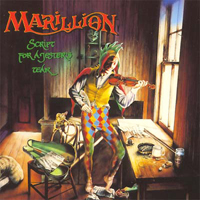
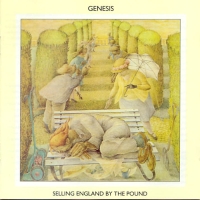
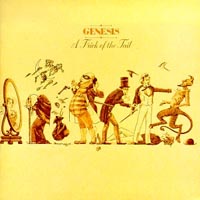
Neo-Progressive rock (more commonly “Neo-Prog”) is a subgenre of Progressive Rock that grew out of a strong influence by and admiration for the classic symphonic prog bands that flourished during the 1970s. Debate over when Neo-Prog actually came into being often takes place, some asserting it began with Script for a Jester’s Tear by Marillion in 1983. Others contend it began with Twelfth Night at the dawn of the 80s, while some even suggest the popular symphonic prog band Genesis gave rise to the sound that would typify or at least highly influence the sound that characterizes Neo-Prog with their 1976 album, A Trick of the Tail.

As a transition, if one analyses the progressive movement just before 1980, then some very influential albums easily come to mind: Steve Hackett - Spectral Mornings, Genesis - Wind & Wuthering, Genesis - And Then There Were Three, Genesis - Seconds Out, Saga - Saga, all the Camel's albums between Breathless and The Single Factor included, and some Eloy's albums, especially Silent Cries And Mighty Echoes. In the 80's, the movement was primarily UK-based, but bands eventually came from countries all around the world, especially in the 90's.

Neo-Prog is characterized by deeply emotional content, often delivered via dramatic lyrics and a generous use of imagery and theatricality on-stage. The music, at odds with a few genres of music held under the Progressive Rock banner, is mostly the product of careful composition, relying less heavily on improvised jamming. The subgenre relies very much on clean, melodic & emotional electric guitar solos, combined with modern, lush, floating and atmospheric keyboards. The main musical influences on the Neo-Prog genre are Genesis, Yes, Camel, and Pink Floyd.

The 1980s:

The style of Neo-Progressive music during this decade was surprisingly not very much influenced by the New Wave movement in the realm of popular music, apart from the band Twelfth Night. Many bands who were influenced by the classic symphonic bands of the 70s sought to infuse new musical technology, such as digital synthesizers, and new production values into their sound, creating progressive rock that was fresh yet still characterized by nuances of the classic era of symphonic prog.

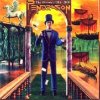
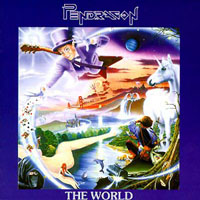
Premier bands of the 80s: Abraxas, IQ, Marillion, Pallas, Pendragon, Twelfth Night

The 1990s/2000s:

Just as popular music became impregnated with the New Wave sound that characterized the early 80s, Neo-Prog moved on to a more refined form that seemed to return more to the roots of progressive rock compositionally, while still trying not to regress into well-worn territory. Neo-Prog often took on a form with a much harder edge than most of the classic symphonic bands ever developed, with bands such as Arena having just as much in common with the Progressive Metal genre as with Neo-Prog.

Premier bands of the 1990s/2000s: Arena, Collage, IQ, Marillion, Pendragon, Quidam, Sylvan

This text prepared by the Neo-prog specialist team - Stonebeard, Cygnus X-2, Greenback

http://www.progarchives.com/subgenre.asp?style=18

Neo Progressive Top Albums


Showing only studios | Based on members ratings | Top 100 Neo Progressive


4.38
MARILLION
Script For A Jester's Tear

(1983)

4.26
ARENA
The Visitor

(1998)

4.22
MARILLION
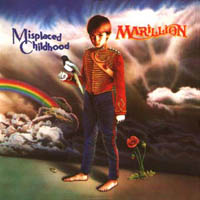
Misplaced Childhood

(1985)

4.24
ARENA
Contagion

(2002)

4.23
PALLAS
The Dreams Of Men

(2005)

4.11
COLLAGE
Moonshine

(1994)

4.10
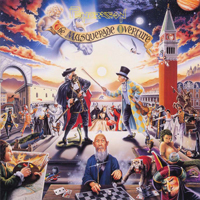
PENDRAGON
The Masquerade Overture

(1996)

4.09
MARILLION
Brave

(1994)

4.18
MAGENTA
Seven

(2004)

4.11
IQ
Ever

(1993)

4.18
SYLVAN
Posthumous Silence

(2006)

4.04
IQ
Dark Matter

(2004)

4.03
MARILLION
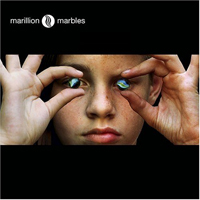
Marbles

(2004)

4.08
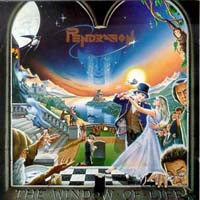
PENDRAGON
The Window Of Life

(1993)

4.07
SATELLITE
Into The Night

(2007)

4.16
CLEPSYDRA
Fears

(1997)

4.00
MARILLION
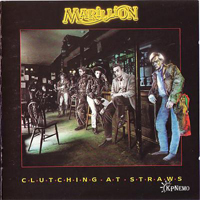
Clutching at Straws

(1987)

4.07
GALAHAD
Empires Never Last

(2007)

4.01
IQ
The Seventh House

(2000)

4.10
TWELFTH NIGHT
Fact And Fiction

(1982)


Mother

Had Sigmund Freud lived 40 more years (to the overripe old age of 123), he would have been delighted to hear such a wonderful example of his life's psychoanlytic work embodied in the haunting lyrics of "Mother." Or had Oedipus lived a few millennium longer than his fictional death he would have found an adversary in the youthful Pink, a young boy whose desire for maternal acceptance and love is arguably equal to the greatest mother-centered protagonists in the history of literature. Contrary to the eye-gouging antics of Oedipus or even the grandiose melodrama later in Floyd's album, "Mother" is relatively low-key and emotionally subtle. The music itself is interestingly split, though with few if any seams to show for it, between the gloomy and simple verse chords and the effervescent, nursery rhyme-like chorus. Coupled with these seemingly disjointed yet oddly congruent styles are the blistering guitar solo and unsettling lyrics, all of which culminate in a perfect example of Floydian schizophrenia. The simple chord progression and uncomplicated lyrical delivery reflect Pink's childhood innocence at the time the song takes place. The very inquisitiveness emulates those youthful stages when the world is one big mystery. Why is the sky blue? Why does the ocean have waves? Where do babies come from? While the steady stream of inquiries seems to imply that Pink is rather young, with most children going through the "question" phase of development around 3 or 4 years of age, the level of seriousness shrouded behind the questions characterize Pink as being fairly older. The implications of governmental conspiracy and public ridicule indicate Pink's age as being around 12 to 14, that age when one learns that many of the world's most time-honored institutions are nothing more than hollow shells of public hope and dictatorial vanity. Santa Claus isn't real and there are many major religions that worship other deities than Christ. It's an age of discovery and self-recreation, when one must adapt and reinvent himself or herself in light of new knowledge. By this reading, the song's question (Pink) and answer (Mother) technique fits perfectly with this stage of budding self and global awareness. From the great Greek philosophers who used questions and answers to illustrate and promote self-realization and their own philosophical ideas, the dialogue form is often the favored method for encouraging mental and philosophical progression. So why would the band choose to illustrate such a serious stage of personal development with the nursery rhyme-like style of the song's chorus? Before we get to that, the song's emotional and psychological message must first be examined.

Similar to the music, the lyrics are as subtle as they are unsettling. Although the song takes a seemingly forthright form of question and answer, the psychological implications behind the lyrics are far from being simple and straightforward. Although the battling was over, the effects of World War II were still extent in the years following the atrocious fight. The destruction of Hiroshima and Nagasaki by the atomic bomb as well as the deaths of millions of Holocaust victims and soldiers were all too fresh in the global consciousness. Fears of nuclear warfare and continued fighting ran rampant through the post-war world, instilling a sense of uncertainty in the generations of and following the war. Such fears are blatantly reflected by the first line of the song in which Pink asks his mother if "they'll drop the bomb," referring to the apprehension of enemy retaliation. However, this line, as well as the majority of the lyrics, is open to a wide range of interpretation. Because of the psychological tendency to group people into two main categories (those like "us" and those apart from "us," or the Other) coupled with the recent divisions of global powers in the war, one automatically assumes that the "they" Pink refers to is the enemy of the Allied forces. Reading the lyrics in this light illustrates Pink's burgeoning global awareness, thereby exhibiting his maturing persona. Yet taking into account that the "they" in the rest of the lyrical stanza oppose Pink in some personal manner casts a different light on the first line. In the succeeding lines, Pink wonders if "they'll like this song" or "try to break my balls," metaphorically referring to emasculation through personal attack, implying that his fears are much more personal rather than global. Therefore, "the bomb" becomes a symbol of any kind of destructive power in life, especially when considering that a bomb killed Pink's dad in the war. Accordingly, the "they" becomes as faceless and unrecognizable as the molded children in "Brick in the Wall, 2." No longer is there a discernible enemy. "They" could be anything from a collective appellation for Life in general to one's closest friend; "they" becomes anything that has potential destructive powers. The war, Pink's teacher, and, as we learn in this song, Pink's mother are all "they"s in the life of Pink. Because he realizes that this Other could be any situation, person, or thing and that they could "drop the bomb" (i.e. cause destruction in his life) at any time, he is consumed with an overwhelming fear, or paranoia rather, of the external world. Being that there is so much potential danger in the world, Pink asks his mother if he should "build a wall." For Pink who is already growing more and more paranoid at such an early age, the internal is his only safe haven from the dangers of the injurious world.

Yet Pink's youthful imaginings shine through even amidst his budding paranoia when he asks if he should "run for president." To clear up a few misconceptions, I seriously doubt that this is a realistic dream of running for United States president considering that Pink is, after all, British. Rather, I believe that the unspecified presidency is used to show that despite his hardening world and personal views, Pink is still young and thus full of childlike expectations and dreams. All dream of being great and important figures at some time or another, Pink is no exception. Still, his momentary dreams of great political power are quashed when his overpowering apprehension takes over when he questions the trustworthiness of the government, wondering if "they'll put me in the firing line." Once again, the "they" is unspecified and can refer to either the actual government or anyone who assails and criticizes those with power. As Pink realizes, power and greatness merely emphasize the vulnerability of a person; when one is in the spotlight, he or she is that much more susceptible to public criticism and attack.

Now it's time for you as a Floyd fan to pick your favorite next line because the band has given us a few choices. The album version ends the verse with "is it just a waste of time," with the "it" arguably referring to Life in general. In light of all of life's hardships, Pink is wondering if it's even worth living. In the movie, Pink sings "am I really dying," referencing his childhood sickness that is further recounted in "Comfortably Numb" as well as the idea that life is nothing more than a gradual death which also reemphasizes Pink's reluctance to continue remaining vulnerable by living in the external world. In concert, Waters sang "what a crazy time," perhaps in reference to the chaotic, post-war and postmodern world Pink grew up in as well as the often-tumultuous phase of adolescence and personal discovery. Whichever line you choose, each contributes a different yet cohesive view of Pink's fragmenting and confused personality.

In true dialogue form, Pink's mother takes over at this part of the song to expand on everything Pink has discussed thus far. What's most interesting about the mother's voice is that it isn't so much a true-to-life recreation of her thoughts and sayings as it is a loose representation of her actions and what those actions are doing and have done to Pink. While the point of view is partly through the mother's eyes, there's a hint of something else behind her words, an omniscience that is beyond her or young Pink's view. It's as if the mother's actions rather than her thoughts and words are speaking, referring to herself in the third person ("she") rather than the first ("I"). No reasonably sane mother would knowingly hurt her own child yet millions of mother's in the world physically and psychologically harm their children through their actions. What one mother might think is best for her child could very well be the thing that causes the most detriment, as in the case of Pink. I personally don't think the mother is directly speaking but the effects of her actions certainly are. The problem with Pink's mother isn't that she is inherently evil or psychotic but rather that she is overprotective. As Waters said in a 1979 interview, "if you can level one accusation at mothers it is that they tend to protect their children too much. Too much and for too long. That's all." Having lost her husband to the war and seeing her son as the only remaining extension of the man she loved, the mother tries every imaginable way to keep her son "under her wing." Unfortunately, such overprotection results in the psychological projection of her own fears onto her son, overcompensating for the loss of her husband by keeping Pink safe from any harm that might arise. In this light, the earlier scenes of Pink dressing in his father's uniform ("Tigers, 2") take on an even stranger tone considering that Pink, in a sense, becomes his father in the watchful eye of his mother in that he is the last remnant of his father. By trying to make up for the past (the mother "failed" at protecting her husband from death and so is determined to keep Pink safe), Mother ultimately stifles what Pink might have been. As if in response to his dreams of greatness at being "president" (symbolically), the mother proclaims that "she won't let you fly but she might let you sing," insinuating that Pink is only allowed brief and fleeting moments of individuality and personal discovery. Instead of the risk of greatness, the mother keeps him "cozy and warm" before finally, and eerily, answering his earlier question by offering to "help build the wall." Whether she is cognizant of it or not (most likely not), the mother's actions largely contribute to Pink's later isolationism. In trying to keep him as safe as can be she inadvertently produces the most harm.

In response to Pink's mother, the ensuing guitar solo blazes into life out of nowhere almost as if musically representing one of Pink's few outbursts of individuality. The reaching voice of the ascending arpeggios gives way to the descending notes that lead back into Pink's paranoid musings. However, more has elapsed between the mother's chorus and Pink's last verse than a guitar solo. "Do you think she's good enough for me," Pink intones in the first line with the general implication that time has elapsed since the adolescent musings of the song's first half. Although it is unknown whether the "she" is just a girlfriend, his wife, or women in general, Pink is apparently in a relationship implying that he is at least a few years older than he was earlier in the song. In that time, Pink's paranoia has seemingly shifted, now including his mother in the list of "they"s in that he now addresses her cynically, asking if the girl he's chosen is "dangerous for him" and sarcastically wondering whether she'll "tear your little boy apart." It seems that Pink has become aware of the damage caused by his mother's overprotection and in response is using her maternal fears against her, mocking her motherly defense with every line and caustic tone of voice.

While Pink's attitude has changed, his mother's has not. Her unwavering protection continues with the last chorus in which she vows to "not let anyone dirty get through." Declaring that she'll "wait up until you get in" and "always find out where you've been," her overprotective resolve to keep Pink "healthy and clean" is merely strengthened. Out of all of her lyrics, the last line is perhaps the most telling and the most damning in which Mother says that Pink will "always be baby to me," emphasizing her personal bond with her child by finally referring to herself in the first person ("me"). For her, Pink will always remain "Baby Blue" and so need her protection, an idea of vigilant guardianship that comes full swing later in "the Trial." The viewer finds that while Pink is physically and mentally older, his mother still holds him captive, restraining him "under [her maternal] wing." Even though Pink is frothing at the bit to discover the world outside of his house, his town, and his country, his mother projects onto him eternal infancy where he'll "always be baby to me." Thus the song is schizophrenically split between two conflicting frames of mind, both musically and lyrically: between Pink's blooming self in the somber verses and the mother's overprotection of her child's innocence in the nursery rhyme-style chorus. We finally see that the mother's chorus is so much like a nursery-rhyme because she continually views her child as nothing more than a helpless infant.

The song ends with Pink forlornly asking if "it need[ed] to be so high?" The point in time is either that of Pink's last verse (when he cynically asks about his relationship with a girl) or possibly later in life (Pink's present state fully enshrined behind his wall). Being that the line is as ambiguous as the rest of the song's lyrics, there is much debate as to what "it" refers to. One theory is that Pink is looking over his childhood and reflecting on his mother's overprotection, wondering if she really had to set her expectations for him at such an overwhelming height. Another view is that "it" refers to Life in general as it has in previous songs. By this reading, Pink questions whether life really had to be so hard and whether pleasure in life had to be so unattainable. But perhaps the most widely accepted reading has "it" referring to the Wall itself with Pink asking if his wall had to be so daunting, so unavoidable, and so insurmountable. Although everyone has a wall, Pink possibly victimizes himself by believing that his is greater and higher than the rest. As Raven so adequately put it in an e-mail: "'Mother, I know I needed a wall, but did it have to be so high that I can't get back out if I need to?'" As we will see later, there is a way out yet Pink is so full of self-pity and contempt for the world that he is blind to any means of escape.

The music is the first noticeable difference between the album and movie versions of "Mother." The simple and gloomy acoustic guitar is replace in the movie with what sounds like a xylophone or some similar instrument picking the individual notes of the song. The resulting sound is very childish and very much like a nursery rhyme, along the same lines as the chorus on the album version. It's almost as if the music is playing from a toddler's hanging mobile, further emphasizing the childlike state that Pink's mother tries to contain her child within. Yet as we see later in the song, the Young Pink is much older than the toddler image that the music evokes. What is odder than this, though, is that the song begins not with images of Pink's mother but with remembrances of his wife. The viewer first sees a Polaroid photograph of Pink and his wife sitting on the bedside table as Pink vainly tries to reach someone on the phone. A quick flashback of Pink and his wife kissing follows, insinuating that it is she that Pink is trying to call. As he hugs his pillow to himself after placing the phone receiver in the cradle, there is a quick shot of Young Pink in a similar position resting his head on his mother's chest. Had Pink been a young toddler, the scene would be relatively unremarkable, yet there is certainly something peculiar at seeing an obviously adolescent boy lying on his mother's bosom in such an infantile posture. Even before the song's lyrics start, Waters is already setting up the framework for the song, showing the overprotective, maternal hold of the mother and Pink's perpetual infancy. In perfectly Freudian fashion, it's these very musings about his mother that trigger thoughts about his wife and vice versa. Many psychoanalysts such as Sigmund Freud purported that most people form relationships with people who remind them of their parents, whether similar in physical appearance or personal demeanor. Freud saw this phenomenon as an extension of the Oedipal / Electra complex (depending on the person's gender) in that the parent of the opposite sex is usually the first person a child loves and seeks love from. Therefore, finding a spouse who is similar to that parent is simply an offshoot of those original puerile feelings. It's hard to say at this time if there are any similar qualities between Pink's wife and mother considering that "Mother" is the first time the viewer is introduced to the wife (in the movie) and one of the first descriptions of Pink's mother.

In the following scene we find the white / red color scheme first depicted in "Happiest Days of Our Lives" in the hall that young Pink sits in. A punished young child walks out of the office Pink sits by, insinuating that it is Pink's turn to be chastised for some offense (perhaps he has been writing more poetry). As I mentioned before, the white and red were shown in the school to subtly show part of the cause of Pink's later outburst in the second "In the Flesh." While the colors are once again shown in the school, they are also depicted in the context of the song "Mother," thereby alluding to the mother's own culpability for adding bricks to Pink's wall and for ultimately creating the Nazi-esque Pink later in the album. As the song unfolds, the viewer begins to see how the mother contributed so many bricks to Pink's wall and how it affected him as an adult (before his final breakdown). Case in point: the following scenes alternate between young Pink watching a neighbor girl undress and adult Pink watching television as his wife undresses. [A side note on Pink's wife: we mainly see her undressing through her shadow, something that will come up later in "Don't Leave Me Now." Additionally, the fact that she is largely viewed by her shadow suggests that she is almost always outside of Pink's periphery, hardly ever getting his full attention.] As we see, young Pink gets thoroughly into the role of voyeur, turning off the light, smoking a cigarette, and watching the girl through binoculars, all to enhance the euphoria of adolescent sexual discovery. Oddly, the adult Pink couldn't care less that his wife undresses before him while trying to entice him out of his TV induced daze. As she sits bare-chested in front of him on the bed, Pink maneuvers himself so that he can see the television. The contrast between the normal sexuality of young Pink and the near-sterility of adult Pink is obvious albeit a bit confusing. But as the scene plays on, we see why adult Pink has become what he is; just as young Pink immerses himself into his voyeuristic strip-show, his mother opens the door to his room, prompting him to quickly put out the cigarette and feign studying. The composition of this scene is beautiful and telling with the face of the mother obscured from sight, making her more of a generalized force of motherhood rather than a specific mother. Moreover, the shot of Pink shamefully looking back at his mom is set up so that the camera looks down on him from above, evoking feelings of the ominous and ever-watchful eye of the god-like Mother.

In the succeeding scenes and as mentioned above in the lyric analysis, Pink asks his mother if he's "really dying" accompanying images of Pink lying in bed (in all actuality looking more worried than sick) with a doctor and his mother beside him. The doctor then points a finger at the mother (perhaps accusingly? As if the mother has worried Pink into illness) and the two walk into the hall to discuss the sickness, closing the door behind them. There are many interesting portions to the scene as a whole, all of which contribute to the sense of mounting anxiety. Firstly, when the mother closes the door to Pink's room, the room is thrown into a cold, blue light implicating Pink's continual existence as "Baby Blue" to the mother. Corresponding to the lyrics of nightmares and fears, fantastical shadows appear on the ceiling resembling the masks worn by the children in "Another Brick in the Wall 2." Just as those certain teachers seek to shape the children into model citizens, the "nightmares" and "fears" of Pink's mother mold Pink into a copy of her own worrisome mind. Simply put, Pink loses his individuality with every passing day under Mother's watchful eye, putting on another mask when he takes on his mom's fears as a part of his own persona. Psychoanalytically speaking, the mother projects her personality onto her son and thereby forms him into what she desires, fears, or both. Because she fears so much for Pink's health and well being, Pink unknowingly takes in those fears and becomes sick. A simpler theory might claim that Pink has a mild fever and the mother, true to her overprotective nature, calls in a doctor, worried that the fever will lead to something fatal. Whatever theory one might take, the overprotection of Mother is still emphasized above all else. Yet it's not just the mom who is contributing to this cycle of perpetual infancy for the next scene shows Pink sneaking into his mother's room and climbing into bed with her, seeking her maternal protection. Interestingly, this moment of action in which Pink pursues maternal guardianship is juxtaposed with a shot of adult Pink touching his sleeping wife's shoulder. Note the same blue light in the scene in adult Pink's bedroom, further equating the mother with the wife and, as Gerald Scarfe says on the DVD commentary, "muddling up his mother with his girlfriend [wife]" in Pink's mind. Like the mother who hardly wakes when Pink climbs into her bed, the wife simply rolls over in her sleep, facing away from Pink. I can't help but be reminded of a line from "The Hero's Return" on Floyd's album "the Final Cut" which reads: "Sweet heart, sweet heart, are you fast asleep? Good, cause that's the only time when I can really speak to you. There is something that I've locked away. A memory that is too painful to withstand the light of day." Considering the fact that "the Final Cut" is a sort of sequel to "the Wall" in the loosest way imaginable (a few of the songs are "Wall" leftovers or continuations), I'd like to think that this line was spoken by Pink to his sleeping wife regarding his wall. It's only when his wife is asleep that he can truly speak his mind without feeling like he's putting himself out there to be torn down and ridiculed. If this line was written with no Pink or Wall intentions, I'd like to think that Waters and Parker were inspired by it so much that they shot this scene. But that could very well be my wishful thinking. Nevertheless, the tones of both this scene and the line from "the Hero's Return" are similar. Both characters (Pink and "Final Cut" narrator) simply cannot communicate for fear of revealing too much of their inner selves for fear of baring their souls and being met with destructive criticism. Pink seeks his mother's protection and his wife's companionship only when they are asleep and unable to disparage him.

The next scene is similarly intricate and full of meaning (what in this album ISN'T?!?). Once again, Young Pink runs down the stairs but when he opens the door, he sees (at least in his mind) a skeleton lying next to his mother in bed. One is immediately reminded of Pink's dead father, an idea that lends itself to an interpretation of the Mother rather than Pink. The mother is unable to continue with her life because she holds so fast to the memory of her dead husband and because she refuses to let him die by keeping him alive, in a sense, by projecting her feelings concerning the husband onto Pink. This reading implies that continual grieving leads to decay rather than the preservation of memory of the deceased. The mother decays because she is unable to move on in her life and Pink decays because he is restricted from growing mentally and emotionally by her unyielding protection. Another interpretation of this scene fits more closely with the actual music of the album. Right as Pink discovers the skeleton, Gilmour's guitar solo roars into electric life. As I previously stated, the guitar solo can be heard as an outburst of individuality and self-discovery for Pink. If such is true, then Pink's discovery of the skeleton corresponds with his own self-discovery. Metaphorically speaking, Pink sees himself as the skeleton in the bed and realizes the damaging effects of his mother's overprotection, thus accounting for his change in tone between his first and last verses. He finally comprehends the stifling death of individuality that he is being put through and lashes out against his mother's refuge. This idea is further emphasized with the flash-forward to Pink's wedding, showing that Pink has moved beyond the grasp of his mother by marrying. Or has he? As Freud would believe, perhaps he is further entrenching himself in the idea of maternal protection by marrying someone whom he believes to be like his mother. It's difficult to say at this time being that we have little character background for the wife. From all indications, the wife's personality is certainly different from Mother's. The scene after the solo in which Pink's wife tries to get his attention at the piano is far from the ominous feelings evoked by scenes containing the mother. The wife appears to be loving, jovial, and most of all hurt by Pink's lack of communication, all of which are qualities that can't be applied to the mother. The wife eventually leaves the room feeling neglected and Pink continues in his daze, having "taken too many drugs at this point, in my view" as Roger Waters states on the DVD. Despite the apparent incongruities between Freud's theories and Pink's choice of a non-Mother-like wife, another interpretation is born. As the second verse implies, Pink tries to find a girlfriend / wife who is nothing like his mother, who is the antithesis of everything that his mother wanted him to have. However he is not happy with his choice. Instead, he longs for the maternal protection and affection that he has forsaken and not finding it in the non-Mother-like wife he's chosen, Pink turns to other things to fill the void (see "What Shall We Do Now?").
At this point in the movie, the song has really become less about the actual Mother of the title and more about the effects she's had on Pink's adult life. She's affected his sexuality, his inability to communicate freely, his attitude towards women. And because of these effects, Pink's wife eventually finds solace and love in another man.

In my opinion, the shots of Pink in a ballroom dancing class are mainly used to emphasize his adolescent humiliation caused by his mother. It is obvious that Pink does not wish to be in the class; he has no dance partner and when he finally does ask a girl to dance, she is twice his height and seemingly reluctant to dance with him. On the DVD, Waters claims that this scene was inspired by a true childhood event. Though his real mother, he claims, wasn't as overprotective as Pink's, she did make him attend ballroom dancing lessons in knee-high pants against his wishes, humiliating the young Waters so much that the memory is indelibly etched into his memory. While Pink is wearing full pants instead of knee-highs, the humiliation is still present in the awkwardness of Pink's pairing with a taller girl.

After this brief digression into Pink's past, the arc returns to the relative-present in which Pink, unable to contact his wife, curls into the fetal position on his bed, once again emphasizing his inability to leave his infancy…another effect of his mother's overprotection. The viewer finally, but not surprisingly, gets to see why Pink is unable to contact his wife as the final line is sung. Referencing his growing wall, the line is sung over the metaphorical placement of yet another brick: the wife's infidelity. Similar to the earlier shot in which the mother's head is obscured, making her less personal and more of a universal force, the final shot in the song merely shows the entangled legs of two lovers, their faces unseen but their actions overwhelmingly felt.
After the song is over, Pink continues to try to get in touch with his wife. Instead, the lover's voice comes over the phone instead of his wife's and Pink finally realizes what she's done (still not fully realizing what he's done to make her behave that way, though). Pink slides down the wall in a daze and his hand slips from the receiver in a visual that parallels the earlier image of his dead father's hand falling from the receiver after his bunker was bombed. In both instances, Life dealt both the father and Pink unexpected blows. While the father physically dies while calling for reinforcements, Pink's metaphorical death is merely accelerated with this latest "bombshell."

An interesting side note about this scene is that the phone call used at this part in the movie (also found after "Young Lust" on the album) is said to have really taken place, though not fully in the same context. Roger Waters once stated that he made this phone call while on stage, I believe, during a concert. Although the person on the other end of the line was in on the gag, the unsuspecting operator simply thought that this was a real call and so tried her best to patch Waters through to his "wife" only to have another man answer. It's hard to say if this is a true story, though, because Waters semi-refutes it on the DVD commentary, saying that it is either a false story or that he just doesn't remember doing it; both accounts are possible. Here's what Waters had to say back in 1979 concerning the operator, leading me to believe that the gag really did take place and that Waters' memory has become a victim of age: "I think [Young Lust] is great; I love that operator on it, I think she's wonderful. She didn't know what was happening at all, the way she picks up on…I mean it's been edited a bit, but the way she picks up, all that stuff about 'is there supposed to be someone else there beside your wife' you know I think is amazing, she really clicked into it straight away. She's terrific!"

http://www.thewallanalysis.com/mother.html